What Should I Do If My Basement Floods?

If your basement floods, immediately shut off electrical power to the area for safety, then locate and stop the water source if possible. Call emergency plumbing services and water damage restoration specialists right away, while documenting the damage with photos for insurance purposes. Begin removing water and start cleanup within 24-48 hours to prevent mold growth, but avoid pumping out water too quickly as this can damage foundation walls.

Immediate Safety Steps

When faced with a flooded basement, your first priority must be safety. Water and electricity create a deadly combination, so before you even step into the water, locate your electrical panel and shut off power to the affected areas. If you can’t safely reach your electrical panel, contact your utility company for emergency disconnection.

After ensuring electrical safety, stop using plumbing fixtures in your home, including toilets, sinks, and washing machines. Using these while your basement is flooded could worsen the situation by adding more water to the mix.

Finding and Stopping the Water Source

Basement flooding typically comes from one of three sources: internal plumbing failures, external water intrusion, or sewage backups. Each requires a different approach:

  • Plumbing failures: If a pipe has burst or an appliance has failed, locate your main water shut-off valve and turn it off immediately. This valve is typically located where the water main enters your home.
  • External flooding: During heavy rains or groundwater issues, water may enter through foundation cracks, window wells, or poor drainage. In these cases, you may need to wait until rain subsides while focusing on water removal.
  • Sewage backups: These are identifiable by their distinctive odor and require professional handling due to contamination risks. Do not attempt to clean sewage water yourself.

Getting Professional Help

Emergency Plumbing Services

At Bedrock Plumbing & Drain Cleaning, we provide 24/7 emergency services for basement flooding. Professional plumbers can:

  • Accurately identify the water source
  • Make necessary repairs to prevent further flooding
  • Provide guidance on preventative measures for the future

Don’t wait to call—the longer water sits in your basement, the more damage it causes.

Water Damage Restoration

Beyond plumbing repairs, you’ll likely need water damage restoration services. These specialists have industrial-grade water extraction equipment, dehumidifiers, and air movers that can dry your basement much faster than consumer equipment. They also provide:

  • Professional assessment of structural damage
  • Mold prevention treatment
  • Sanitization of affected areas
  • Coordination with your insurance company

Proper Water Removal Techniques

When removing water from your basement, avoid pumping it out too quickly. If groundwater levels outside are high, rapid water removal could create pressure imbalances that might crack or collapse foundation walls.

Instead:

  1. Remove water gradually (about one-third of the water per day)
  2. Use submersible pumps for deep water
  3. Follow with wet/dry vacuums for shallow water
  4. Set up dehumidifiers and fans once standing water is removed

Documentation and Insurance

Before beginning cleanup, thoroughly document the damage:

  • Take photos and videos of all affected areas and items
  • Make detailed notes about damaged possessions
  • Save receipts for any emergency repairs or cleanup supplies

Contact your insurance company as soon as possible. Many homeowner’s policies don’t automatically cover basement flooding, but you may have coverage depending on the flood’s cause and whether you have additional flood insurance.

Cleanup and Sanitization

Begin cleanup within 24-48 hours to prevent mold growth. Wear protective gear including:

  • Waterproof boots
  • Rubber gloves
  • N95 respirator mask (especially if sewage is involved)

Sort items into categories:

  • Salvageable items that can be cleaned and dried
  • Items requiring professional restoration
  • Items that must be discarded

Sanitize all surfaces that contacted flood water using a solution of one cup bleach per gallon of water, or commercial disinfectants designed for flood cleanup.

Preventing Future Flooding

After addressing the immediate emergency, consider these preventative measures:

  • Install a sump pump with battery backup
  • Apply waterproofing sealants to basement walls
  • Improve exterior grading around your foundation
  • Clean gutters regularly and extend downspouts away from your home
  • Consider installing check valves to prevent sewage backups

When to Call Bedrock Plumbing & Drain Cleaning

Don’t face basement flooding alone. Our expert team at Bedrock Plumbing & Drain Cleaning provides fast, reliable emergency service throughout the area. We can identify the source of your basement flooding, make necessary repairs, and help prevent future incidents.

Contact us immediately at the first sign of basement water issues—whether it’s a minor leak or major flooding. The sooner we can address the problem, the less damage your home will sustain. Call our 24/7 emergency line or visit bedrockplumbers.com to schedule service and protect your home from water damage.

How Do I Find a Water Leak in My Home?

Detecting a water leak in your home requires a systematic approach. Start by checking your water meter when no water is in use – if the meter continues to run, you likely have a leak. Other signs to look for include water stains, musty odors, unexplained increases in water bills, sounds of running water, unusually warm spots on floors, or visible corrosion on pipes. For hard-to-find leaks, professional plumbers use specialized acoustic and thermal imaging equipment to pinpoint the exact location without invasive measures.

Common Signs of Water Leaks in Your Home

Water leaks can cause significant damage to your property if left undetected. Being aware of the warning signs can help you identify problems early and prevent costly repairs. Here are the most common indicators that you may have a water leak:

Unexpected Increases in Water Bills

A sudden spike in your water bill without a corresponding increase in usage could indicate a hidden leak. Compare your current bill with previous months to identify unusual patterns. Even small leaks can waste hundreds of gallons of water monthly, resulting in noticeably higher bills.

Water Meter Test

Your water meter is one of the most reliable tools for detecting leaks:

  1. Turn off all water-using appliances and fixtures in your home
  2. Locate your water meter and check its reading
  3. Wait 30 minutes without using any water
  4. Check the meter again – if the reading has changed, you likely have a leak
  5. For more precise detection, some meters have a small triangle or flow indicator that moves even with minor leaks

Visible Water Damage

Inspect your walls, ceilings, and floors for signs of water damage, including:

  • Discoloration or water stains
  • Warping or buckling of floors or walls
  • Peeling paint or wallpaper
  • Bubbling or blistering on surfaces
  • Sagging ceilings or soft drywall

Musty Odors and Mold Growth

Persistent dampness from leaks creates ideal conditions for mold and mildew. If you notice musty odors or visible mold growth, particularly in areas that shouldn’t be wet, you may have a hidden leak. Pay special attention to bathrooms, kitchens, and basements where plumbing is concentrated.

Finding Hidden Leaks

Some leaks are less obvious but can still cause significant damage over time. Here’s how to locate those harder-to-find problems:

Listen for Running Water

When your home is quiet, listen for the sound of running water when all fixtures are turned off. Pay particular attention near walls containing plumbing pipes. Dripping or rushing sounds can indicate a leak within walls or under floors.

Check for Warm Spots on Floors

For homes with slab foundations or radiant floor heating, leaks in hot water lines can create unusual warm spots on your floor. Walk barefoot across floors and note any unexpectedly warm areas, which could indicate a hot water leak beneath.

Inspect Fixtures and Appliances

Carefully examine the areas around:

  • Toilets (look for water around the base or perform a dye test by adding food coloring to the tank)
  • Sinks and faucets (check under cabinets for moisture or corrosion)
  • Washing machine connections and hoses
  • Water heater (look for pooling water or corrosion)
  • Dishwasher (check for water on the floor after cycles)

Examine Exterior Walls and Foundation

Walk around your home’s perimeter looking for:

  • Unusually lush or green patches of grass
  • Pooling water when it hasn’t rained
  • Cracks in the foundation with water seepage
  • Algae or moss growth on walls

Professional Leak Detection Methods

When DIY methods fail to locate the source of a leak, it’s time to call professionals like Bedrock Plumbing & Drain Cleaning. We use specialized equipment to find leaks with minimal disruption:

Acoustic Leak Detection

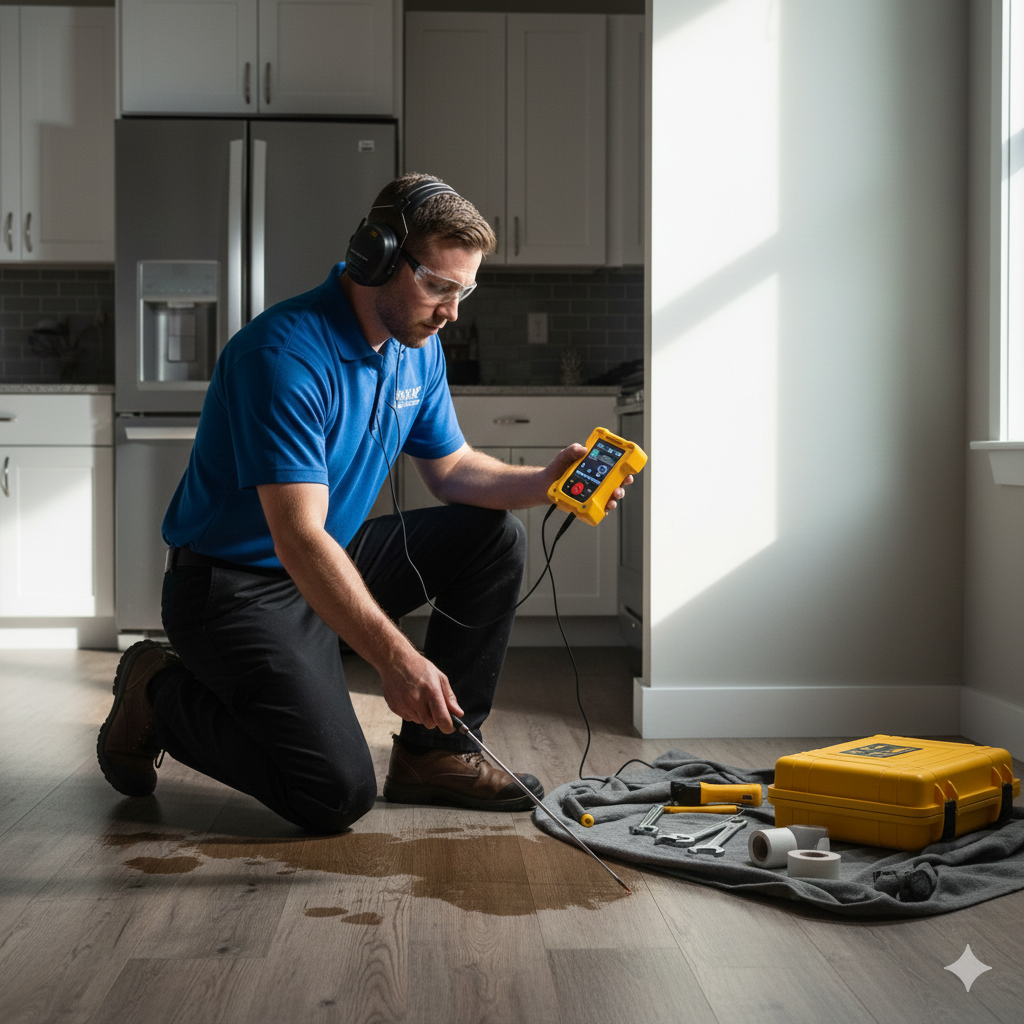
Professional plumbers use sensitive listening devices to detect the sound of water escaping from pipes, even when it’s inaudible to human ears. This technology can pinpoint leaks behind walls, under floors, or in your yard without destructive investigation.

Thermal Imaging Cameras

These sophisticated cameras detect temperature differences that could indicate the presence of water. Leaking areas often appear cooler (for cold water pipes) or warmer (for hot water pipes) than surrounding materials, making them visible on thermal scans.

Video Pipe Inspection

For suspected leaks within drainage or sewer pipes, plumbers can insert small cameras to visually inspect the interior of your plumbing system, identifying cracks, corrosion, or other damage that might be causing leaks.

Preventing Future Leaks

Once you’ve addressed existing leaks, take these preventative measures:

  • Schedule regular plumbing maintenance inspections
  • Monitor water pressure (excessive pressure can strain pipes)
  • Replace older appliance hoses with stainless steel braided versions
  • Insulate pipes in unheated areas to prevent freezing and bursting
  • Know the location of your main water shut-off valve

When to Call Bedrock Plumbing & Drain Cleaning

If you’ve discovered signs of a water leak in your North Carolina home, don’t wait for the problem to worsen. Our experienced technicians at Bedrock Plumbing & Drain Cleaning have the expertise and equipment to quickly locate and repair leaks, preventing costly water damage.

Contact us today at (704) 593-4512 for prompt, professional leak detection and repair services. Remember, addressing leaks early not only saves water but also protects your home from structural damage and mold issues.

Should I Open Cabinet Doors During Extreme Cold?

Yes, opening cabinet doors under sinks during subzero cold is highly recommended to allow warm air circulation around plumbing, reducing freeze risk. This simple action helps prevent frozen pipes by ensuring the home’s heated air can reach vulnerable plumbing. For maximum protection, combine this practice with dripping faucets and maintaining a minimum indoor temperature of 55°F, especially in extremely cold weather.

Why Opening Cabinet Doors Protects Your Pipes

When temperatures plummet below freezing, your home’s plumbing system becomes vulnerable to one of winter’s most destructive forces: frozen pipes. Pipes located in exterior walls or under sinks in cabinets are particularly at risk because they’re often in spaces that receive less heat than the rest of your home. Opening cabinet doors is a simple yet effective strategy to protect these vulnerable pipes.

Under normal circumstances, closed cabinet doors create a barrier that blocks the warm air in your home from reaching the pipes. During extreme cold, the temperature inside these enclosed spaces can drop significantly lower than your home’s ambient temperature. By opening the doors, you allow heated air to circulate freely around the plumbing, maintaining a temperature above freezing.

The Science Behind Pipe Freezing

Pipes freeze when the water inside them reaches 32°F (0°C). When water freezes, it expands by approximately 9%, creating tremendous pressure inside the pipe. This pressure can cause pipes to crack or burst, leading to costly water damage repairs.

Most homes maintain interior temperatures well above freezing, but the challenge occurs in areas where pipes are exposed to exterior walls or unheated spaces. Cabinets under sinks often back up to exterior walls, creating cold spots where pipes are susceptible to freezing, even when your home feels warm overall.

Complete Cold Weather Pipe Protection Strategy

Opening cabinet doors should be part of a comprehensive approach to protecting your plumbing during extreme cold:

1. Open All Relevant Cabinet Doors

Focus on cabinets that contain plumbing, especially those along exterior walls. This includes:

  • Under kitchen sinks
  • Bathroom vanities
  • Utility sinks in laundry rooms or basements
  • Any cabinets housing water lines on exterior walls

For maximum effectiveness, open these doors several hours before temperatures are expected to drop below freezing.

2. Keep Faucets Dripping

Allow cold water to drip from faucets served by exposed pipes. Even a trickle of water helps prevent freezing by keeping water moving through the system. Running water is much less likely to freeze than standing water.

3. Maintain Consistent Indoor Temperature

Set your thermostat no lower than 55°F, even when you’re away from home. While it might be tempting to lower the temperature to save on heating costs, the potential expense of repairing water damage from burst pipes far outweighs any energy savings.

4. Add Extra Insulation Where Needed

Consider adding pipe insulation to particularly vulnerable areas. Foam pipe sleeves can be easily installed without professional help and provide additional protection against freezing.

Special Considerations for Extreme Conditions

During particularly severe cold snaps (temperatures below 0°F or -18°C), take additional precautions:

  • Use a space heater (safely positioned) to add extra warmth near vulnerable plumbing
  • Remove items from under-sink cabinets to improve air circulation
  • Consider using a fan to direct warm air into opened cabinets
  • If you have a crawl space, ensure vents are closed to retain heat

When to Take Preventative Action

Don’t wait until temperatures drop to dangerous levels. Monitor weather forecasts and implement these protective measures when:

  • Temperatures are predicted to fall below 20°F (-7°C) for extended periods
  • Your home will be vacant during cold weather
  • You’ve experienced frozen pipes in the past
  • Your home is older or has known insulation issues

Preventing Frozen Pipes in Vacant Properties

If you’re leaving your home for an extended period during winter:

  • Set your thermostat to at least 55°F
  • Shut off the main water supply and drain the system
  • Have a friend or neighbor check on your home regularly
  • Consider installing a temperature monitoring system that alerts you to dangerous drops

What To Do If Your Pipes Freeze Despite Prevention

If you turn on a faucet and only a trickle comes out, you likely have a frozen pipe. In this situation:

  • Keep the faucet open
  • Apply gentle heat to the frozen section (hot towels, hair dryer, space heater)
  • Never use an open flame to thaw pipes
  • Call Bedrock Plumbing & Drain Cleaning immediately if you cannot locate or thaw the frozen section

Don’t wait for a plumbing emergency—contact Bedrock Plumbing & Drain Cleaning today for a comprehensive winter plumbing inspection or assistance with frozen pipe emergencies. Our experienced technicians serve the local area with prompt, professional service to keep your plumbing flowing safely all winter long.

What Is a Pressure Reducing Valve and Do I Need One?

A Pressure Reducing Valve (PRV) is a crucial plumbing component that regulates municipal water pressure to maintain safe levels (typically 45-60 PSI) within your home’s plumbing system. PRVs are necessary if your incoming water pressure exceeds 80 PSI to prevent damage to pipes, appliances, and fixtures. Without this protection, excessive pressure can lead to premature plumbing failures, water hammer, and increased water bills. Older homes in particular often lack PRVs, making them vulnerable to pressure-related issues.

How Pressure Reducing Valves Work

Pressure reducing valves function as mechanical gatekeepers in your plumbing system. Installed on your main water line after it enters your home, these devices use a spring-loaded diaphragm mechanism to automatically regulate water pressure. When water pressure from the municipal supply exceeds your valve’s preset limit, the valve partially closes to restrict flow, ensuring consistent and safe pressure throughout your home.

The beauty of a PRV is that once properly installed and adjusted, it works passively without requiring any maintenance for years. Most valves can be fine-tuned to deliver optimal pressure based on your specific needs, typically between 45-60 PSI, which provides good water flow without putting stress on your plumbing system.

Signs You May Need a Pressure Reducing Valve

Not sure if your home needs a PRV? Here are key indicators that your water pressure might be too high:

Audible Plumbing Symptoms

  • Water hammer (loud banging noises when you turn off faucets)
  • Whistling or screeching pipes when using water
  • Running toilets that never seem to stop filling

Visible Warning Signs

  • Leaking faucets throughout your home
  • Dripping showerheads even when turned off
  • Frequent leaks in water supply lines to toilets or appliances
  • Water heater pressure relief valve activating regularly

Performance Issues

  • Appliances like washing machines and dishwashers failing prematurely
  • Unexpected increases in water bills without change in usage
  • Spraying, splashing faucets when turned on fully

If you’re experiencing several of these symptoms, it’s worth having your water pressure tested by a professional plumber.

Benefits of Installing a Pressure Reducing Valve

Extended Plumbing System Lifespan

High water pressure is like having your plumbing system constantly operate under stress. By maintaining proper pressure levels, a PRV can significantly extend the life of your pipes, fittings, appliances, and fixtures. This means fewer emergency repairs and replacement costs over time.

Water Conservation and Lower Bills

Excessive water pressure forces more water through your fixtures than necessary. A PRV can reduce water consumption by 30% or more, translating to meaningful savings on your monthly water bill. This conservation aspect makes PRVs both economically and environmentally beneficial.

Reduced Risk of Catastrophic Leaks

Perhaps the most significant benefit is protection against sudden, major plumbing failures. High pressure can cause pipes to rupture or connections to fail when you’re not home, potentially causing thousands of dollars in water damage. A properly functioning PRV dramatically reduces this risk.

Improved Appliance Performance

Appliances like dishwashers, washing machines, and water heaters are designed to operate at specific pressure ranges. When provided with properly regulated water pressure, these appliances function more efficiently and last longer.

Do You Need a Pressure Reducing Valve?

The simplest way to determine if you need a PRV is to measure your home’s water pressure. This can be done with an inexpensive pressure gauge that attaches to an outdoor spigot. Here’s how to check:

  1. Attach a water pressure gauge to an outside faucet
  2. Make sure no water is being used inside or outside the home
  3. Turn on the faucet and read the pressure gauge
  4. If the reading exceeds 80 PSI, you should install a PRV

In many municipalities, water pressure can range from 60 to well over 100 PSI depending on your location and elevation relative to the water supply. If you live downhill from a water tower or in an area known for high pressure, a PRV is particularly important.

Professional Installation Considerations

While PRVs are relatively simple devices, professional installation is recommended for several reasons:

  • Proper sizing based on your home’s specific water demands
  • Expert placement to ensure optimal performance
  • Adjustment to the ideal pressure for your specific plumbing system
  • Addition of bypass valves and pressure gauges for monitoring and maintenance

At Bedrock Plumbing & Drain Cleaning, our licensed plumbers can evaluate your water pressure, recommend the appropriate valve, and provide professional installation that ensures long-term protection for your plumbing system.

When to Call a Professional

If you’ve determined your home has high water pressure, or you’re experiencing symptoms that suggest a pressure issue, it’s time to consult with a professional plumber. Our team at Bedrock Plumbing & Drain Cleaning can assess your situation, recommend the right solution, and provide expert installation to protect your home’s plumbing system.

Contact us today to schedule a water pressure evaluation and learn more about how a pressure reducing valve can save your plumbing system and reduce your water bills. Your pipes—and your wallet—will thank you!

Why Is My Water Bill Higher Than Normal?

High water bills are typically caused by hidden leaks, increased water consumption, or mechanical issues like running toilets. The average household wastes nearly 10,000 gallons annually from easily fixable leaks. To identify the source, check your water meter, inspect all toilets and faucets for leaks, and examine outdoor irrigation systems for damage or excessive usage.

Common Causes of Unexpectedly High Water Bills

A sudden spike in your water bill can be alarming, especially when your water usage habits haven’t changed. At Bedrock Plumbing & Drain Cleaning, we regularly help Portland homeowners solve the mystery of skyrocketing water bills. Understanding the potential causes can help you address the issue quickly and prevent unnecessary water waste and expense.

Hidden Water Leaks

One of the most common culprits behind elevated water bills is a hidden leak somewhere in your plumbing system. These silent water thieves can waste hundreds of gallons before you notice any visible signs.

  • Under-slab leaks: Water lines beneath your home’s foundation can develop leaks that go undetected for months
  • Wall leaks: Pipes within walls can slowly leak, causing gradual water damage and increasing your bill
  • Outdoor line leaks: Underground irrigation lines or the main water line to your home may develop cracks or breaks

Even a small leak can waste surprising amounts of water. A pinhole-sized leak can waste approximately 170 gallons per day, or over 5,000 gallons per month. This alone can increase your bill by $50-$100 depending on local water rates.

Toilet Problems

Toilets are notorious for water waste when malfunctioning. A running toilet can use up to 200 gallons of water daily – that’s equivalent to taking 10 extra showers every day!

Common toilet issues include:

  • Faulty flapper valves that don’t seal properly
  • Malfunctioning fill valves that continuously run
  • Silent leaks that occur without the obvious sound of running water

To check for toilet leaks, place food coloring in the tank and wait 15 minutes without flushing. If color appears in the bowl, you have a leak that needs repair.

Seasonal Usage Changes

Many homeowners experience bill fluctuations due to seasonal activities:

  • Summer irrigation: Lawn and garden watering can dramatically increase consumption
  • Swimming pool filling: Adding or topping off a pool requires thousands of gallons
  • Holiday gatherings: Having extra guests means more showers, toilet flushes, and dishwasher cycles
  • Pressure washing: Spring cleaning that includes pressure washing driveways and siding uses substantial water

Faulty Water Meter or Billing Errors

While less common, meter problems or billing mistakes do happen:

  • Mechanical water meters can malfunction, especially older models
  • Billing departments occasionally make errors in reading or recording usage
  • Recent rate increases may have been implemented without clear notification

How to Investigate Your High Water Bill

Check Your Water Meter

Your water meter is your best tool for detecting leaks:

  1. Turn off all water in your home (including ice makers and irrigation systems)
  2. Record the number on your water meter
  3. Wait 2-3 hours without using any water
  4. Check the meter again – if it has changed, you likely have a leak

Inspect All Fixtures and Appliances

Thoroughly examine:

  • Toilets: Listen for hissing or running sounds, perform the dye test
  • Faucets: Check for drips or moisture around handles and spouts
  • Appliances: Inspect connections to dishwashers, washing machines, and water heaters
  • Showerheads: Look for constant dripping or moisture when not in use

Review Your Water Usage Habits

Consider recent changes that might explain increased consumption:

  • New household members or frequent guests
  • Recently installed water-using appliances or fixtures
  • Changes in landscaping or irrigation practices
  • Home improvement projects that required water use

When to Call a Professional Plumber

While some causes of high water bills can be easily identified and fixed by homeowners, others require professional expertise:

  • Hidden leaks: Detection equipment like acoustic sensors, thermal cameras, and pressure testing are needed for concealed leaks
  • Slab leaks: These serious problems require specialized repair approaches
  • Main line issues: Problems with the water service line require excavation equipment and expertise
  • Meter verification: Professionals can test meter accuracy if you suspect malfunction

At Bedrock Plumbing & Drain Cleaning, our experienced technicians have the tools and knowledge to locate even the most elusive leaks throughout your Portland home’s plumbing system.

Preventing Future High Water Bills

Once you’ve addressed the immediate cause of your high bill, consider these preventative measures:

  • Install water-efficient fixtures and appliances
  • Regularly check for leaks using the meter test quarterly
  • Consider smart water monitoring systems that alert you to unusual usage
  • Establish a maintenance schedule for plumbing inspections

Need Help With Your High Water Bill?

If you’ve investigated the common causes but still can’t identify why your water bill is higher than normal, it’s time to call the professionals. Our team at Bedrock Plumbing & Drain Cleaning specializes in comprehensive leak detection and repair services throughout Portland and surrounding areas. We use non-invasive techniques to locate hidden leaks and provide cost-effective solutions to prevent water waste and protect your home.

Contact us today at (503) 342-7691 to schedule a professional inspection and stop throwing money down the drain with unnecessarily high water bills.

Is it safe to use my dishwasher if my washing machine drain is backing up?


No, avoid using your dishwasher if your washing machine drain is backing up, as both appliances typically share the same drainage system and the blockage will likely affect both fixtures. Using the dishwasher could cause wastewater to overflow from the washing machine standpipe or create slow drainage that leaves dirty water in your dishwasher. The backup indicates a clog in your main drain line or vent issue that needs clearing before safely operating either appliance—continued use risks water damage and unsanitary conditions.

Understanding Your Home’s Drainage System

When your washing machine drain backs up, it’s a warning sign that shouldn’t be ignored, especially when considering using other water-using appliances like your dishwasher. Most modern homes have an interconnected plumbing system where multiple appliances and fixtures share main drainage pipes. This means that a clog affecting your washing machine drain likely impacts other areas of your home’s plumbing system as well.

Your washing machine typically drains into a standpipe that connects to the same main drain line that services your kitchen sink and dishwasher. This shared drainage pathway means that a blockage anywhere in the system can create backups in multiple locations. When water can’t flow freely through the main drain, it seeks the path of least resistance—often backing up through the lowest or nearest drain point.

Why Dishwashers and Washing Machines Are Connected

Both your dishwasher and washing machine:

  • Discharge large volumes of wastewater quickly
  • Often contain similar debris (food particles vs. lint/fibers)
  • Connect to the same branch lines in many home configurations
  • May share vent systems that allow proper drainage

When one appliance experiences drainage problems, it serves as an early warning that other appliances might soon face similar issues. Ignoring this warning by continuing to use your dishwasher could transform a manageable problem into a significant plumbing emergency.

Potential Risks of Using Your Dishwasher During a Backup

Continuing to use your dishwasher when your washing machine drain is backed up can lead to several serious problems:

Water Damage Risks

Using your dishwasher during a drainage backup increases the chance of water overflow, which can damage:

  • Flooring (particularly hardwood or laminate)
  • Baseboards and drywall
  • Cabinets and under-sink areas
  • Subflooring and even ceiling materials in multi-story homes

Water damage restoration is significantly more expensive than addressing the initial plumbing problem promptly. What might start as a simple clog removal can escalate to a full-scale renovation project if water damage becomes extensive.

Health and Sanitation Concerns

Beyond property damage, there are important health considerations:

  • Backed-up drains may contain bacteria and contaminants from previous washing machine cycles
  • Stagnant water becomes a breeding ground for mold and mildew
  • Dishwashers may not properly sanitize dishes if they can’t drain correctly
  • Unpleasant odors can develop and spread throughout your home

Your dishwasher’s effectiveness depends on its ability to drain dirty water completely before the clean rinse cycle. With a partial drain blockage, you might be “cleaning” your dishes with contaminated water.

Identifying the Root Cause of Drainage Issues

Before attempting to use either appliance, it’s important to understand what’s causing the backup:

Common Causes of Washing Machine Drain Backups

  1. Local clogs: Lint, fabric fibers, and soap residue build-up in the washing machine drain pipe
  2. Main line blockages: More serious clogs in your home’s primary drainage system
  3. Vent system problems: Inadequate venting creating pressure issues that prevent proper drainage
  4. Sewer line issues: Municipal sewer problems or septic system failures affecting your entire plumbing system

DIY Assessment vs. Professional Evaluation

While some minor clogs can be addressed with DIY methods, recurring or severe backups typically require professional intervention. At Bedrock Plumbing & Drain Cleaning, we recommend having a professional assessment if:

  • The backup occurs repeatedly
  • Multiple fixtures or appliances are affected
  • DIY drain cleaners haven’t resolved the issue
  • You notice unusual sounds or odors from your drains

Temporary Solutions While Awaiting Professional Help

If you’re experiencing a washing machine drain backup and cannot get immediate professional assistance:

  1. Avoid using both appliances until the drainage issue is resolved
  2. Try a plunger on the washing machine standpipe (if accessible)
  3. Check and clean the washing machine’s lint trap (if your model has one)
  4. Ensure the drain hose is properly positioned and not kinked
  5. Use towels to contain any minor leaks and prevent water damage

When to Call a Professional Plumber

Some situations clearly indicate the need for professional help:

  • Water backing up from multiple drains
  • Sewage or foul odors from drains
  • Gurgling sounds in pipes when using fixtures
  • Repeated backups despite attempts to clear drains

At Bedrock Plumbing & Drain Cleaning, our experienced technicians have the specialized equipment and expertise to diagnose and resolve complex drainage issues that DIY methods simply can’t address.

Preventive Maintenance to Avoid Future Backups

Once your drainage system is working properly again, consider these preventive measures:

  • Install mesh screens on washing machine drains to catch lint and debris
  • Periodically flush drains with hot water and enzyme-based cleaners
  • Schedule annual professional drain cleaning to prevent buildup
  • Consider a backwater valve if sewer backups are common in your area

Regular maintenance is significantly less expensive and disruptive than emergency repairs and cleanup from major backups.

Need Help With Backing Up Drains?

If you’re experiencing washing machine or dishwasher drainage issues in the greater Portland area, don’t risk further damage by continuing to use your appliances. Contact Bedrock Plumbing & Drain Cleaning today for prompt, professional service to resolve your drainage problems and prevent costly water damage. Our experienced technicians provide efficient solutions to keep your home’s plumbing system functioning properly.


Why does my garbage disposal smell like sewage and how do I fix it?


Sewage smells from your garbage disposal typically indicate trapped food debris decomposing in the grinding chamber, splash guard, or a dry P-trap that’s allowing sewer gases to escape. Fix it by grinding ice cubes with rock salt to dislodge buildup, thoroughly cleaning under the rubber splash guard with a brush and dish soap, and running cold water for 30 seconds after each use. If odors persist after cleaning, the P-trap may have a leak or your disposal could have failing seals that need professional replacement.

Common Causes of Sewage Odors in Garbage Disposals

That unpleasant sewage smell coming from your garbage disposal can quickly make your kitchen an uncomfortable place to be. Understanding what’s causing these odors is the first step to eliminating them. As Denver’s trusted plumbing experts, we’ve identified several common culprits behind disposal odors:

Trapped Food Debris

The most common cause of disposal odors is food particles that become trapped in various parts of the unit. Over time, these particles decompose, creating that unmistakable rotten smell. Areas where debris often hides include:

  • The grinding chamber itself
  • Under the rubber splash guard or baffle
  • In crevices around the disposal unit
  • In the drain line immediately below the disposal

Unlike regular sink drains that only handle water, disposals process food waste, creating more opportunity for odor-causing buildups. Certain foods like fish, eggs, and dairy products are particularly prone to causing strong odors as they break down.

Dry P-Trap

Another potential source of sewage smells is a dry P-trap. The P-trap is the curved section of pipe beneath your sink that retains water, creating a seal that prevents sewer gases from entering your home. If your disposal isn’t used frequently or you’ve been away from home, this water seal can evaporate, allowing sewer gases to rise through the drain.

Failing Disposal Seals

In older garbage disposals, the internal seals can deteriorate over time. These seals are designed to prevent water and waste from leaking out of the unit, but they also help block sewer gases. When these seals fail, unpleasant odors from your plumbing system can escape through the disposal.

How to Eliminate Garbage Disposal Odors

The good news is that most disposal odor issues can be resolved with proper cleaning and maintenance. Here’s how to tackle the problem effectively:

Deep Clean the Grinding Chamber

  1. Ice and Salt Method: Fill the disposal with ice cubes and a cup of rock salt. Run cold water and turn on the disposal. The ice helps scrape away buildup while the salt acts as an abrasive cleaner.
  2. Citrus Refresh: After cleaning with ice, grind citrus peels (lemon or orange work well) with cold water to help neutralize odors and leave a fresh scent.
  3. Baking Soda and Vinegar: Pour half a cup of baking soda into the disposal followed by a cup of white vinegar. Let it fizz for a few minutes, then flush with hot water.

Clean the Splash Guard

The rubber splash guard (the flappy piece at the drain opening) is often the main culprit for harboring smelly bacteria:

  1. Turn off power to the disposal at the circuit breaker for safety
  2. Use a toothbrush or dish brush with dish soap to scrub under and around all the rubber flaps
  3. Pay special attention to the underside of the splash guard where slime often accumulates
  4. Rinse thoroughly with hot water

Proper Disposal Usage Habits

Prevent future odors by following these best practices:

  • Always run cold water before, during, and for 30 seconds after using the disposal
  • Avoid putting fibrous or starchy foods (potato peels, celery, coffee grounds) in the disposal
  • Cut larger items into smaller pieces before grinding
  • Run the disposal regularly, even if just with water, to prevent the P-trap from drying out

Address Plumbing Issues

If odors persist after thorough cleaning:

  • Check for leaks in the P-trap beneath the disposal
  • Run water in rarely-used sinks to refill P-traps
  • Consider having a professional inspect for failing seals or other plumbing issues

When to Call a Professional Plumber

While many disposal odor issues can be resolved with DIY methods, sometimes you need professional assistance. Contact Bedrock Plumbing & Drain Cleaning if:

  • Sewage smells persist after multiple cleaning attempts
  • You notice leaks beneath your disposal
  • Your disposal is more than 10 years old and may have failing internal components
  • The disposal makes unusual noises or doesn’t function properly

Our experienced Denver plumbers can diagnose complex issues and determine if a repair or replacement is needed. We can also inspect your overall plumbing system to ensure there aren’t larger sewer line problems contributing to the odors.

Preventative Maintenance Tips

Keep your disposal odor-free with these ongoing maintenance tips:

  • Weekly cleaning with ice and salt or baking soda and vinegar
  • Monthly deep cleaning of the splash guard
  • Using cold water generously when operating the disposal
  • Grinding citrus peels occasionally for a fresh scent

Don’t let a smelly garbage disposal ruin your kitchen experience. For persistent issues or professional maintenance, contact Bedrock Plumbing & Drain Cleaning today. Our Denver plumbing experts are ready to help ensure your disposal runs clean and odor-free.


How do I know if my sump pump is working properly?


Test your sump pump by pouring a bucket of water into the sump pit—the float should rise and trigger the pump to activate within seconds, then shut off once water drains. Check that water discharges away from your foundation through the outlet pipe, listen for unusual grinding or rattling noises, and verify the backup power system if you have one. Annual testing before storm season, plus checking the inlet screen for debris, helps prevent basement flooding emergencies.

Why Regular Sump Pump Testing Is Essential

Your sump pump is your home’s first line of defense against basement flooding and water damage. This often-forgotten appliance silently protects your home until heavy rains or rising groundwater levels demand its service. Unfortunately, many homeowners only discover their sump pump isn’t working properly when water is already filling their basement. By then, it’s too late to prevent costly damage to your home’s foundation, stored belongings, and finished basement areas.

Regular testing ensures your sump pump will perform when you need it most. A properly functioning system not only protects your property investment but also prevents the growth of mold and mildew that can affect your family’s health. At Bedrock Plumbing & Drain Cleaning, we’ve seen countless preventable basement floods that could have been avoided with simple maintenance checks.

Step-by-Step Sump Pump Testing Process

The Bucket Test

The most straightforward way to test your sump pump is with a simple bucket of water:

  1. Locate your sump pit, typically found in the lowest part of your basement or crawlspace.
  2. Remove the sump pump cover (if applicable).
  3. Slowly pour approximately 5 gallons of water into the pit.
  4. Watch the float valve or pressure sensor as the water level rises.
  5. Your pump should activate automatically when water reaches a certain level.
  6. Once activated, the pump should quickly remove the water and then shut off on its own.

If your pump doesn’t turn on, turns on but doesn’t pump water, or fails to shut off properly, these are clear signs of a problem requiring professional attention.

Check the Discharge Line

While your pump is running during the test, go outside to verify water is properly exiting through the discharge pipe:

  1. Follow the discharge pipe from your home to its exit point.
  2. Ensure water flows freely away from your foundation.
  3. Check for cracks, leaks, or blockages in the pipe.
  4. Verify that discharged water isn’t flowing back toward your home.

Improper drainage can render even a perfectly functioning pump ineffective, as water may simply recirculate back into your basement.

Listen for Unusual Sounds

A healthy sump pump should operate with a consistent humming sound. During your test, listen carefully for:

  • Grinding or scraping noises (indicating worn bearings)
  • Rattling or vibrating (signs of impeller problems)
  • Excessive noise (possibly a failing motor)
  • Gurgling after shutdown (potential check valve issues)

These auditory clues can help identify problems before they lead to complete failure.

Test Your Backup Systems

Battery Backup Check

If you have a battery backup system (highly recommended for homes in flood-prone areas), test it by:

  1. Disconnecting the main power to your primary pump.
  2. Running the bucket test again to ensure the backup activates.
  3. Checking the battery’s charge level and age.
  4. Reconnecting the main power when testing is complete.

Batteries typically need replacement every 2-5 years, even if rarely used.

Secondary Pump Verification

For homes with a secondary pump system:

  1. Ensure both pumps are properly positioned in the pit.
  2. Verify that the secondary pump is set to activate at a higher water level than the primary.
  3. Test each pump individually to confirm proper operation.

Maintenance Tips for Optimal Performance

To keep your sump pump in peak condition:

  • Clean the inlet screen quarterly to prevent debris buildup
  • Check and clean the pit annually, removing any sediment or gravel
  • Inspect all electrical connections for corrosion
  • Test the pump seasonally, especially before spring rains or storm season
  • Consider a professional inspection annually to catch hidden issues

Many homeowners in the Denver area schedule their sump pump maintenance checks in early spring, before the rainy season begins and snowmelt increases groundwater levels.

When to Call a Professional

While routine testing can be handled by most homeowners, certain situations call for professional assistance:

  • Pumps older than 7-10 years (the typical lifespan)
  • Frequent cycling even during dry periods
  • Visible rust or corrosion
  • Failure to activate during testing
  • Unusual noises or vibrations
  • Previous flooding incidents

At Bedrock Plumbing & Drain Cleaning, we provide comprehensive sump pump inspections, maintenance, repairs, and replacements to ensure your basement stays dry year-round.

Protect Your Home Before It’s Too Late

Don’t wait for rising water to discover your sump pump isn’t working. Regular testing takes just minutes but can save thousands in water damage repairs. If you’re unsure about your sump pump’s performance or would like a professional assessment, contact Bedrock Plumbing & Drain Cleaning today. Our experienced technicians serve the entire Denver metro area with same-day service available for emergency situations. Call us at (303) 555-1234 or visit bedrockplumbers.com to schedule your sump pump inspection and ensure your home stays protected from water damage.


Can tree roots grow back after hydro jetting my sewer line?


Yes, tree roots will grow back into sewer lines after hydro jetting, typically within 1-3 years depending on tree proximity and pipe condition. Hydro jetting removes existing roots but doesn’t prevent regrowth—roots naturally seek moisture and nutrients from cracked or damaged pipes. Long-term solutions include pipe lining to seal entry points, root barrier installation, chemical root treatments, or in severe cases, replacing the damaged section with root-resistant materials and removing problem trees.

Why Tree Roots Return After Hydro Jetting

Tree roots are remarkably persistent when it comes to finding water sources. Your sewer line presents an ideal environment for roots—a consistent source of moisture and nutrients that trees naturally seek out. When you hydro jet your sewer line, the high-pressure water effectively clears out existing root intrusions by cutting through and flushing away the vegetation that has made its way inside your pipes. However, this procedure is essentially a cleaning method rather than a permanent fix.

The fundamental problem remains: if there are cracks, loose joints, or deteriorating sections in your sewer line, roots will eventually find these entry points again. Think of hydro jetting as treating the symptom (root blockage) rather than curing the disease (pipe vulnerability).

How Quickly Roots Regrow After Hydro Jetting

Several factors influence how quickly roots will return to your freshly jetted sewer line:

  • Tree proximity: Trees within 10-20 feet of your sewer line pose the highest risk, with fast-growing species like willows, poplars, and silver maples being particularly aggressive.
  • Pipe condition: Older clay pipes with numerous joints or cracked pipes provide easy access points for roots.
  • Soil conditions: Moist, fertile soil accelerates root growth toward your sewer line.
  • Season: Root growth is typically most aggressive during spring and summer months.

For most homeowners, roots will begin to reenter the sewer line within 6-12 months after hydro jetting, with significant blockages potentially reforming within 1-3 years without additional preventative measures.

Effective Long-Term Solutions for Root Problems

While hydro jetting provides excellent temporary relief from root blockages, addressing the underlying issue requires a more comprehensive approach:

Pipe Lining and Rehabilitation

One of the most effective long-term solutions is pipe lining, also known as cured-in-place pipe (CIPP). This process involves installing a resin-saturated liner inside your existing pipe, which then hardens to create a seamless, root-resistant pipe within your old pipe. Benefits include:

  • Creates a solid barrier that roots cannot penetrate
  • Extends pipe lifespan by 50+ years
  • Requires no excavation (trenchless technology)
  • Addresses all cracks and joints simultaneously

Root Barriers and Preventative Landscaping

Physical barriers installed between trees and sewer lines can redirect root growth away from your pipes:

  • Copper sulfate-infused barriers can be installed vertically in the soil
  • Consider removing or replacing problematic trees with species less likely to cause pipe damage
  • Maintain at least 20 feet between new trees and sewer lines

Regular Maintenance Schedule

Establishing a proactive maintenance routine significantly reduces the risk of severe blockages:

  • Schedule regular hydro jetting every 18-24 months if you have nearby trees
  • Consider annual camera inspections to catch root intrusions early
  • Use root-killing treatments containing copper sulfate or dichlobenil as recommended by professionals

Chemical Root Control

Between hydro jetting services, chemical treatments can slow root regrowth:

  • Copper sulfate-based root killers can be flushed down toilets periodically
  • Professional-grade foaming root treatments can coat pipe interiors to inhibit growth
  • Note: Always use chemicals according to manufacturer instructions and local regulations

When to Consider Pipe Replacement

In severe cases of repeated root intrusion, especially with aging clay or concrete pipes, replacement may be the most cost-effective long-term solution:

  • Modern PVC and HDPE pipes have fewer joints and are more root-resistant
  • Seamless pipe installation eliminates many potential entry points
  • Though initially more expensive, replacement can prevent recurring costs from repeated hydro jetting

Signs You Need Root Removal Service

Watch for these warning signs that roots may have returned to your sewer line:

  • Multiple slow-draining fixtures throughout your home
  • Gurgling sounds from toilets or drains
  • Sewage backups, especially during heavy water usage
  • Lush, green patches in your yard above the sewer line
  • Unpleasant odors from drains

Trust Bedrock Plumbing for Complete Root Solutions

At Bedrock Plumbing & Drain Cleaning, we understand that root intrusion requires both immediate relief and long-term planning. Our comprehensive approach includes high-powered hydro jetting to clear current blockages, camera inspection to assess pipe condition, and expert recommendations for preventing future problems.

Don’t wait until roots cause a complete sewer backup. Contact our experienced team today for a thorough evaluation of your sewer system and personalized recommendations to keep roots at bay for years to come. Call us or visit our website to schedule your sewer line inspection and discuss permanent solutions to tree root problems.


What should I do immediately after discovering a slab leak?


Turn off your main water supply immediately to prevent further water damage beneath your foundation, then document visible signs like warm floor spots, increased water bills, or foundation cracks with photos. Move furniture and valuables away from affected areas, and contact a licensed plumber with leak detection equipment—slab leaks require professional assessment since they occur in pipes encased in concrete. Avoid attempting DIY repairs, as accessing under-slab plumbing requires specialized tools and expertise to prevent structural damage.

Understanding Slab Leaks: A Homeowner’s Nightmare

Discovering a slab leak—a water line rupture beneath your home’s concrete foundation—can be alarming and overwhelming. These hidden leaks occur in the copper or PEX water lines running underneath your foundation slab and can cause extensive damage if not addressed promptly. Slab leaks are particularly troublesome because they often go undetected until significant damage has already occurred. Water continuously seeping beneath your foundation can compromise structural integrity, create perfect conditions for mold growth, and result in shocking water bills.

Immediate Actions to Take After Discovering a Slab Leak

1. Shut Off Your Main Water Supply

The moment you suspect a slab leak, locate your home’s main water shut-off valve and turn it off. This valve is typically located near your water meter, in your basement, or on an exterior wall of your home. Stopping water flow is the most critical first step as it immediately prevents further water damage beneath your foundation. Every minute counts when dealing with a slab leak, as continuing water flow can saturate the soil underneath your home, potentially causing foundation shifting or settlement.

2. Document the Damage

Before moving anything, use your smartphone to take clear photos and videos of all visible signs of the leak. Document:

  • Wet or warm spots on your floor
  • Visible cracks in floors or walls
  • Water stains or discoloration
  • Buckled hardwood or laminate flooring
  • Mold or mildew growth
  • Standing water

This documentation serves two important purposes: it helps plumbing professionals diagnose the problem more accurately and provides essential evidence for potential insurance claims. Many homeowners insurance policies cover sudden plumbing failures, but you’ll need proof of the damage and its cause.

3. Protect Your Belongings

Once you’ve documented the scene, move furniture, electronics, and valuable items away from the affected area. For items that cannot be moved, place them on blocks or waterproof barriers to prevent water damage. Remove wet rugs or floor coverings to allow the area to begin drying and to prevent mold growth. If there’s standing water, safely remove it with towels, mops, or a wet/dry vacuum if available.

4. Contact a Licensed Plumbing Professional

Slab leaks require specialized detection equipment and professional expertise. Contact a licensed plumber with experience in slab leak detection and repair immediately. At Bedrock Plumbing & Drain Cleaning, our technicians use advanced equipment such as electronic leak detection devices, infrared cameras, and pressure testing equipment to pinpoint the exact location of slab leaks with minimal disruption to your home.

Avoid contacting general contractors or attempting DIY fixes, as improper handling can result in more extensive damage to your plumbing system and home foundation.

5. Control Humidity and Begin Drying

While waiting for professional help, take steps to control humidity in the affected area to prevent mold growth. Set up fans to circulate air and use dehumidifiers if available. Open windows if weather permits, but avoid using your HVAC system as this could spread moisture throughout your home.

Professional Slab Leak Repair Options

When our Bedrock Plumbing technicians arrive, they’ll assess the situation and recommend the most appropriate repair method based on the leak’s location, severity, and your home’s specific conditions:

Spot Repair

For isolated leaks with accessible locations, we may recommend a spot repair where we create a small access point in your slab to repair just the damaged section of pipe.

Re-routing (Re-piping)

Sometimes the most cost-effective solution is to bypass the damaged pipe by installing new piping through walls or ceilings, avoiding the need to break through your concrete slab.

Complete Repiping

For older homes with deteriorating copper pipes or multiple leaks, complete repiping might be the most economical long-term solution to prevent future slab leaks.

Preventing Future Slab Leaks

After resolving your immediate slab leak crisis, consider these preventative measures:

  • Schedule regular plumbing inspections
  • Install a water pressure regulator to prevent excessive pressure
  • Consider whole-house water filtration if you have hard water
  • Monitor your water bill for unexpected increases
  • Be alert to warm spots on floors or the sound of running water when all fixtures are off

When to Call Bedrock Plumbing & Drain Cleaning

Slab leaks require immediate professional attention to minimize damage to your home. Our experienced technicians at Bedrock Plumbing & Drain Cleaning are available 24/7 for emergency slab leak detection and repair throughout the area. We use non-invasive detection methods and offer transparent pricing with no hidden fees.

Don’t let a slab leak compromise your home’s foundation and safety. Contact us immediately at the first sign of a potential leak for prompt, professional service that will protect your home and give you peace of mind.