

Choosing the right size tankless water heater for your home is critical to ensure you enjoy uninterrupted hot water, energy efficiency, and cost savings. Many homeowners in Denver neighborhoods like Stapleton, Cherry Creek, and near Washington Park often face challenges determining what size tankless water heater best fits their household needs. This comprehensive guide, informed by the expert team at Bedrock Plumbing & Drain Cleaning, will walk you through the essential steps to accurately size your tankless water heater and avoid common pitfalls.
At Bedrock Plumbing & Drain Cleaning, we leverage years of experience servicing homes in Denver and surrounding areas, including near City Park and the Denver Botanic Gardens. Our expertise in tankless water heater replacement and installation allows us to provide precise recommendations tailored to your home’s unique hot water demands. For more information about our trusted services, visit our professional plumbing services page.
Understanding Tankless Water Heaters and Their Benefits
Unlike traditional storage water heaters, tankless water heaters heat water on demand, eliminating the need for a storage tank. This means you only use energy when hot water is needed, offering significant energy savings. Proper sizing is crucial because an undersized unit won’t meet your household’s demand during peak usage, and an oversized unit will cost more upfront and may waste energy.
Bedrock Plumbing & Drain Cleaning specializes in tankless water heater replacement, ensuring that your new system matches your usage pattern perfectly. We consider factors like the number of bathrooms, simultaneous water use, and incoming water temperature to recommend the optimal unit.
Key Factors to Determine Tankless Water Heater Size
To select the correct tankless water heater size, you need to assess two primary factors:
- Maximum Flow Rate (Gallons Per Minute – GPM): This is the total amount of hot water your household will use at the same time, accounting for all fixtures such as showers, faucets, dishwashers, and washing machines.
- Temperature Rise: The difference between the incoming cold water temperature and the desired hot water temperature.
For example, in Denver, where groundwater temperatures can be lower due to the Rocky Mountain climate, the temperature rise required might be higher than in warmer regions. This is an important consideration Bedrock Plumbing & Drain Cleaning takes into account when advising customers in areas like Highlands Ranch or Aurora.
Calculating Your Maximum Flow Rate
Determine the number of fixtures likely to be used simultaneously during peak times, then add their flow rates. Typical flow rates include:
- Shower: 1.5 – 2.5 GPM
- Kitchen faucet: 1 – 2 GPM
- Dishwasher: 1.5 GPM
- Washing machine: 1 – 2 GPM
For example, if you expect to run two showers and a dishwasher simultaneously, your peak flow rate could be around 6 GPM. Bedrock Plumbing & Drain Cleaning technicians often perform detailed home assessments to measure actual usage and recommend the precise unit size.
Determining the Temperature Rise
Temperature rise is calculated by subtracting the incoming water temperature from your desired output temperature. In Denver, groundwater temperatures can average around 50°F during winter. If you want your hot water at 120°F, your temperature rise would be approximately 70°F.
Tankless water heaters have specifications indicating the maximum flow rate they can provide at a given temperature rise. For instance, a unit might deliver 5 GPM at a 70°F temperature rise. If your peak flow rate exceeds this, you’ll need a larger capacity unit or multiple units.
Experience and Expertise from Bedrock Plumbing & Drain Cleaning
The team at Bedrock Plumbing & Drain Cleaning brings over a decade of experience installing and replacing tankless water heaters throughout Denver neighborhoods such as Capitol Hill and Lowry. We have replaced numerous systems where previous units were either undersized, causing water shortages during peak use, or oversized, leading to unnecessarily high costs.
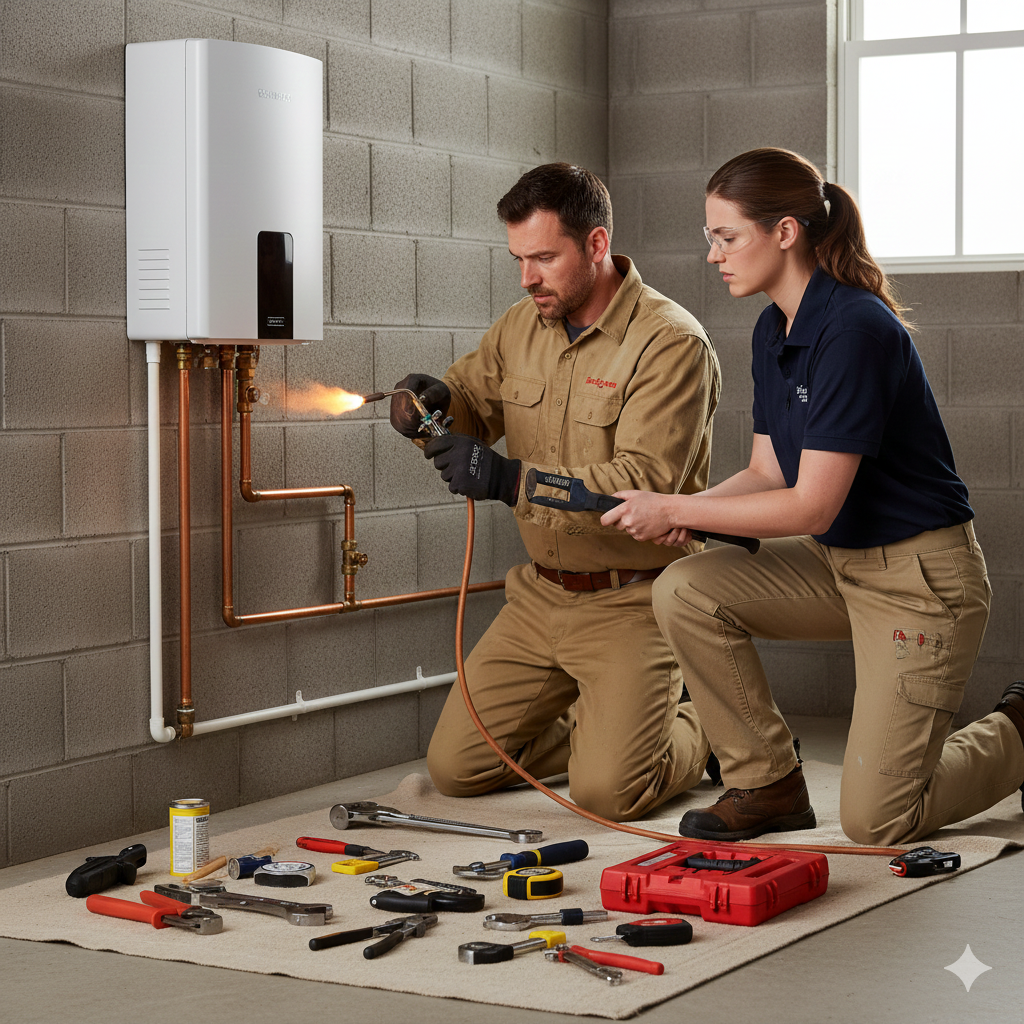
Our hands-on approach includes measuring your household’s actual water usage patterns, evaluating the local water temperature, and calculating the correct temperature rise. This method ensures that each installation maximizes efficiency and comfort. One case study involved a family in Stapleton who were experiencing inconsistent hot water supply during morning showers. After an onsite evaluation, we replaced their undersized unit with a properly sized Navien tankless water heater, providing consistent hot water for all fixtures simultaneously.
Authoritative Data and Statistics
According to data shared by Bedrock Plumbing & Drain Cleaning, most single-family homes in Denver require a tankless water heater with a flow rate between 5 and 7 GPM to meet simultaneous usage demands during peak hours. Homes with more than three bathrooms or multiple simultaneous users may need units capable of 7+ GPM.
Bedrock Plumbing & Drain Cleaning highlights that selecting a water heater with too low a GPM rating leads to cold water interruptions, whereas too high a rating increases installation costs and energy usage unnecessarily. Their experts recommend sizing based on actual household usage rather than relying solely on generic rules of thumb.
Local Geo-Relevance: Why Location Matters
Denver’s unique climate and seasonal temperature variations significantly impact your tankless water heater sizing needs. Areas closer to the foothills, such as Cherry Creek or near Sloan’s Lake, often experience colder groundwater temperatures in winter, increasing the temperature rise required for comfortable hot water.
Additionally, proximity to major highways like I-25 or shopping centers such as the Denver Pavilions can influence the availability of professional plumbing services like Bedrock Plumbing & Drain Cleaning, ensuring timely installation and maintenance support.
How Bedrock Plumbing & Drain Cleaning Ensures Trustworthiness
Bedrock Plumbing & Drain Cleaning emphasizes transparency and thorough research in all water heater replacements. Their technicians utilize precise measurement tools and consult manufacturer specifications to verify sizing and installation requirements. Customers receive detailed explanations of the sizing process and options available to them.
The company also maintains clear communication throughout the project, backed by verified customer testimonials and adherence to local building codes and safety standards. Their commitment to quality ensures homeowners in Denver and surrounding communities can trust their tankless water heater installation to provide reliable, efficient hot water.
Steps to Determine Your Tankless Water Heater Size
- List all fixtures that will use hot water simultaneously.
- Find the flow rate (GPM) for each fixture.
- Add all flow rates to get your peak demand.
- Determine the incoming groundwater temperature for your area.
- Calculate the temperature rise needed based on your desired hot water temperature.
- Match this data with manufacturer specifications or consult a professional.
For expert assistance with this process, Bedrock Plumbing & Drain Cleaning offers comprehensive evaluations and can recommend the perfect tankless water heater model to fit your home’s needs.
Learn more about tankless water heater replacement options from the trusted experts at Bedrock Plumbing & Drain Cleaning by visiting their dedicated tankless water heater replacement service page.
Frequently Asked Questions
How do I calculate the flow rate needed for my tankless water heater?
To calculate the flow rate, identify the number of fixtures (showers, faucets, appliances) that will be used simultaneously. Then, add their individual flow rates measured in gallons per minute (GPM). For example, two showers (2.5 GPM each) and a dishwasher (1.5 GPM) running at the same time would require a flow rate of 6.5 GPM. This total helps determine the minimum capacity your tankless water heater must support.
Why is temperature rise important when sizing a tankless water heater?
Temperature rise represents the difference between the incoming cold water temperature and the desired hot water temperature. It is crucial because tankless water heaters have limits on the flow rate they can heat at a specific temperature rise. In colder regions like Denver, a higher temperature rise is needed during winter, which affects the size of the tankless water heater required to meet demand.
Can I use a tankless water heater for my entire home?
Yes, many homeowners use whole-house tankless water heaters. Bedrock Plumbing & Drain Cleaning advises selecting a unit with sufficient flow rate capacity to supply all simultaneous hot water demands in your home. For larger homes or multiple bathrooms, multiple units or higher capacity models may be necessary.
What happens if my tankless water heater is too small?
If the unit is undersized, it may not supply enough hot water when multiple fixtures are in use, resulting in fluctuating water temperatures or cold water bursts. This can affect comfort and appliance performance. Proper sizing is essential to avoid these issues.
Is there an ideal temperature setting for tankless water heaters?
Most experts, including Bedrock Plumbing & Drain Cleaning, recommend setting your water heater to around 120°F. This temperature balances comfort, safety (to prevent scalding), and energy efficiency. Adjustments can be made based on personal preferences and household needs.
How does Denver’s climate affect tankless water heater sizing?
Denver’s colder groundwater temperatures, especially in winter months, require a greater temperature rise for your water heater to deliver comfortable hot water. This means a unit with a higher heating capacity or flow rate may be necessary compared to warmer climates.
Can I install a tankless water heater myself?
Installation of tankless water heaters involves complex plumbing and electrical work. Bedrock Plumbing & Drain Cleaning strongly recommends professional installation to ensure safety, code compliance, and optimal system performance.
How often should I replace my tankless water heater?
With proper maintenance, tankless water heaters can last 20 years or more. Replacement is usually needed when efficiency drops, repairs become frequent, or the unit no longer meets your household’s hot water demand.
What brands of tankless water heaters does Bedrock Plumbing & Drain Cleaning recommend?
Bedrock Plumbing & Drain Cleaning installs top-quality brands known for reliability and efficiency, including Navien, which offers models suited for Denver’s climate and varying household sizes.
How can I schedule a professional tankless water heater evaluation?
You can contact Bedrock Plumbing & Drain Cleaning via their website or phone to schedule a home evaluation. Their experts will assess your hot water needs, water temperature, and existing plumbing to recommend the best sizing and replacement options.
By following these guidelines and consulting with experienced professionals like Bedrock Plumbing & Drain Cleaning, you can confidently select a tankless water heater that provides reliable, efficient hot water for years to come.